Tuesday, September 7th, 2010
This post is the second in a series. Read the first part here.
 President Obama’s “Address to the Nation on the End of Combat Operations in Iraq,” was consistent with his first public speech expressing his opposition to the war. He stood by the same principles, as he was fulfilling his responsibility as head of state, President for the entire nation and not only those who support him and his partisan position. To paraphrase one of his standard lines, he was not speaking as President of the Blue States or the Red States, but as President of the United States of America. The night of the address and in the days that followed, this most basic quality of his speech was overlooked. Instead, there were misleading interpretations, from Obama’s critics and his supporters, revealing a fundamental problem in our public life. President Obama’s “Address to the Nation on the End of Combat Operations in Iraq,” was consistent with his first public speech expressing his opposition to the war. He stood by the same principles, as he was fulfilling his responsibility as head of state, President for the entire nation and not only those who support him and his partisan position. To paraphrase one of his standard lines, he was not speaking as President of the Blue States or the Red States, but as President of the United States of America. The night of the address and in the days that followed, this most basic quality of his speech was overlooked. Instead, there were misleading interpretations, from Obama’s critics and his supporters, revealing a fundamental problem in our public life.
The Partisan Interpretations
From his partisan opposition, the criticism was strong. <<Obama should have declared victory,>> Senator John McCain and his interviewer Sean Hannity, agreed. (video) He should have given President Bush full credit for the victory. He should have apologized for his opposition to the surge. Lindsey Graham concurred and was particularly critical that Obama did not acknowledge the terrorists’ defeat and the need to extend our momentum in Afghanistan. (video) The emphasis on withdrawal instead of victory was the fundamental problem with the President’s speech. “It’s not about when we leave in Afghanistan. It’s about what we leave behind.” Charles Krauthammer, in the instant analysis following the speech on Fox News, observed that the speech was “both flat and odd.” Flat, because it did not celebrate the victory, but rather emphasized the withdrawal almost as a lamentation. Odd, because of the way he linked his topics, from Iraq to Afghanistan to, most disturbing for Krauthammer, tacking on an “economic pep talk.” There should have been a coherent speech about our missions abroad. Instead there was a speech by a man who is only interested in his domestic agenda. (video) And from his partisan supporters there was also serious criticism, mirroring the rage on the right. <<Obama should have declared defeat,>> Frank . . .
Read more: The End of the Iraq War
Monday, September 6th, 2010
This post is one in a series.
This week President Obama gave an important speech in the Oval office announcing the end of combat operations in Iraq. In October 2002, before the war was declared, he distinguished himself as one of the few political leaders to express clear opposition to the Iraq war. There is an important connection between his words and his actions, then, which I will consider in today’s post, and now, which I will consider in following posts.
The standard way to account for the connection is through cynical interpretation, explaining the texts of these speeches by referring to their context. Much is lost in such cynical interpretation–here, the two speeches are Deliberately Considered.
The Context
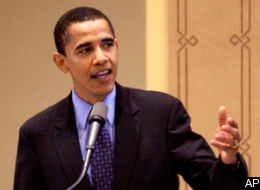 On October 2, 2002, Obama was a relatively obscure politician, a State Senator considering a run for the United States Senate. He had some significant movers and shakers in Chicago eyeing him, realizing his promise. One of them, Bettylu Saltzman, who was organizing the anti-war demonstration, asked him to take part. His political advisors calculated the costs and benefits, seeing a real problem if he sought to run in a state wide race. As an African American, he might solidify his support among white liberals, fortifying the black – white coalition base of a potential run, but he may have appealed to them in any case, and he clearly would lose conservative Democratic support and the support of many independents, who at that time were overwhelmingly supporting the President and his impending war. Nonetheless, since he actually did think that war would be a big mistake, Obama decided to give the speech, notable for its moderation in his opposition to the war: “I don’t oppose all wars. What I am opposed to is a dumb war” was the recurring theme. (See David Remnick, The Bridge). On October 2, 2002, Obama was a relatively obscure politician, a State Senator considering a run for the United States Senate. He had some significant movers and shakers in Chicago eyeing him, realizing his promise. One of them, Bettylu Saltzman, who was organizing the anti-war demonstration, asked him to take part. His political advisors calculated the costs and benefits, seeing a real problem if he sought to run in a state wide race. As an African American, he might solidify his support among white liberals, fortifying the black – white coalition base of a potential run, but he may have appealed to them in any case, and he clearly would lose conservative Democratic support and the support of many independents, who at that time were overwhelmingly supporting the President and his impending war. Nonetheless, since he actually did think that war would be a big mistake, Obama decided to give the speech, notable for its moderation in his opposition to the war: “I don’t oppose all wars. What I am opposed to is a dumb war” was the recurring theme. (See David Remnick, The Bridge).
The moderation of the speech served his immediate purposes and it later helped his candidacy in the Democratic Presidential Primaries. On this point, David Axelrod, Obama’s chief political consultant, has bemoaned the fact that there was no decent video of the speech. Obama opposed the war, but tried to . . .
Read more: Obama on Iraq: Then and Now
Thursday, September 2nd, 2010
 The Tea Party Movement is an instance of the politics of small things–much like some of the causes I have supported. In their interactions, and through its members’ commitment to their cause, a power has been genuinely created. What changes the Tea Party will cause for American politics as a whole is yet to be seen. The Tea Party Movement is an instance of the politics of small things–much like some of the causes I have supported. In their interactions, and through its members’ commitment to their cause, a power has been genuinely created. What changes the Tea Party will cause for American politics as a whole is yet to be seen.

The Tea Party Movement is an instance of “the politics of small things”–a version on the right. I am not a supporter of the aims of this movement, as I was of the Dean and the Obama campaigns and the anti-war movement, and earlier of the democratic opposition in the former Soviet bloc.
In those instances of “the politics of small things,” I was very much both a participant and an observer. I observed how real alternatives to existing practices were developed in ways that I strongly supported, i.e. the development of the Solidarity Trade Union Movement and Democratic opposition in Poland, the emergence of Barack Obama as President of the United States. But even though I am not so involved or supportive of this new instance of the politics of small things, I recognize it for what it is. People have been meeting each other, sharing opinions, discussing strategies, coordinating tactics and becoming clearly visible to each other and to outside observers.
Power has been created in these interactions. This cannot be artificially manufactured. It would not exist unless people willingly and actively took part. The success of this depended upon active participants interacting with others and bringing themselves along. Even if there are powerful forces behind this movement( see Frank Rich’s op-ed and Mayer article), its political power is primarily generated by people acting in concert, as they took part in the Town Hall meetings of the Summer of 2009 and in many other local and statewide movements and campaigns since, and in major demonstrations, such as the one Glenn Beck organized for September 12, 2009 in Washington and now again last weekend at his . . .
Read more: The Tea Party Effect
Friday, August 27th, 2010 

The day after Obama presented his Iftar remarks, in a statement made in passing to a reporter, he “clarified” his position. He was not specifically endorsing the project, he maintained, but was standing on principle and trying to emphasize what the stakes are. (link)
“I was not commenting and I will not comment on the wisdom of making the decision to put a mosque there. I was commenting very specifically on the right people have that dates back to our founding. That’s what our country is about.”
This statement was interpreted as a reversal of position by the center’s opponents and by those who are critical of Obama’s every move, but also by relatively objective media reports. And some of those who had most passionately celebrated Obama’s remarks were dismayed by his apparent change of position. They all paid attention to the first sentence of his second statement and not to the second two sentences, which, I think, were more central. They paid attention to the apparent implications of the statement, but not to its meaning.
As the controversies about the center have raged, Obama’s fundamental position has been lost to the political noise. While the politics around the controversy always revolved around the question, for or against the “Ground Zero Mosque,” he at all points emphasized that free and diverse religious practices are an American right and definitive of American identity. We have paid attention to the politics of the moment.
Will it hurt the Democrats and help the Republicans? Will Rick Lazio’s bid to be the Senator from New York sink or swim on this? Will this episode confirm the suspicions about Obama coming from the left and the right? But we have not considered seriously the broader politics, beyond the obsessions of the here and now, beyond our national borders. In his second statement, Obama wanted to emphasize his concern with such broader issues, as he has tried to distance himself from the immediate controversy. The condensed nature of the passing comment led to confusion. He was trying to thread a needle, but the sensibility of public discussion was too coarse for this . . .
Read more: Obama Attempts to Walk a Fine Line in Park51 Debate
Thursday, August 26th, 2010 

In his remarks at the Iftar Dinner at the State Dining Room of the White House, President Obama continued to discharge his responsibilities as Storyteller-in-Chief with distinction.
He clearly illuminated fundamental principles of the American polity. He highlighted their long history, and he applied the principles with their historical resonance to a pressing problem of the day. Yet, the politics of the day, concerning the so called “Ground Zero Mosque,” confused matters, and his attempt to respond to the politics has added to the confusion. I hope in the coming days and months he addresses the confusion. But, in the meanwhile, we need to remember what the issues are apart from the silly interpretations of the 24/7 news machine. His remarks should be deliberately considered.
Today, remembering the significance of the speech. Tomorrow, a consideration of the confusion which followed. Obama welcomed his guests, including members of the diplomatic corps, his administration and Congress, and offered his best wishes to Muslims from around the world for the holy month of Ramadan. He recalled the several years that the Iftar dinner has been held at the White House, as similar events have been hosted to celebrate Christmas, Passover and Diwali. He observed how these events mark the role of faith in the lives of the American people and affirm “the basic truth that we are all children of God, and we all draw strength and a sense of purpose from our beliefs.” The events are “an affirmation of who we are as Americans,” with a long history, illuminated by Obama by citing the words of Thomas Jefferson in the Virginia Act of Establishing Religious Freedom and remembering the First Amendment of the Constitution.
This tradition of religious diversity and respect has made the United States politically strong and open to vibrant and multiple religious traditions, the President noted, making us “a nation where the ability of peoples of different faiths to coexist peacefully and with mutual respect for one another stands in stark contrast to the religious conflict that persists elsewhere around the globe.”
Yet, he recalled, there have been controversies, most recently . . .
Read more: Obama’s Iftar Dinner Speech
Wednesday, August 25th, 2010
 Stanley Fish has an interesting piece on conspiracy theorists on the left posted in the today’s Times. His general point is that the belief in hidden conspiracies is held across the political spectrum, not only among those who believe that Obama is Muslim and not an American citizen. Stanley Fish has an interesting piece on conspiracy theorists on the left posted in the today’s Times. His general point is that the belief in hidden conspiracies is held across the political spectrum, not only among those who believe that Obama is Muslim and not an American citizen.
I suppose he is right. He is underscoring an important fact which highlights a significant challenge to democratic life. Conspiracy theories are the ultimate form of political cynicism. They are the opposite of criticism. They undermine the capacity for democratic deliberation, as they explain everything and justify not taking into account those who have different understandings and interests. This is why I often declare: As a matter of principle I am the last one to recognize a conspiracy.
Wednesday, August 25th, 2010 

My recent reflections on the debate over the Park Islamic Cultural Center have been fueled and inspired by my personal experiences surrounding the September 11 attacks and their aftermath.
After 9/11, I despaired. As I put it in The Politics of Small Things, it hurt to think. I knew that the people who attacked the World Trade Center really were a threat, but the political responses to the threat seemed to me to be wrong.
The attack hit very close to home. Two close friends were in the Towers, one survived, a childhood friend, Steve Assael, but one was killed, Mike Asher, my closest adult friend . On that fateful day, I didn’t know what had happened to either of my friends. In the days, weeks and months that followed, as I attended to personal consequences of the attacks, I was dismayed by the public response.
A war on terrorism was declared which didn’t make much sense, as the very real threat of Al Qaeda was not sufficiently recognized by anti-war critics. Terrorism and anti-terrorism seemed to be replacing Communism and ideological anti-Communism (the most radical and resolute form of which were Fascism and Nazism), and many who were critical of these tendencies were not realisticly facing up to the challenges of the day. Simple Manichaeism again overlooked global complexity across the political spectrum. There did not seem to be any alternative, as the Republican President was getting carried away, pushed by a broad wave of popular support, and the Democrats in Congress, and reporters and commentators in the media, dared not question the patriotic effervescence.
My book, which was dedicated to Mike, was an attempt to explore how alternatives on the margins did provide grounds for hope. Specific small interactions provided alternatives to faulty grand narratives, people meeting each other on the basis of shared concerns and commitments, speaking and acting in each other’s presence, developing a capacity to act in concert, i.e. constituting political power in the sense of Hannah Arendt. I knew how important such power was in the development of the democratic . . .
Read more: Park 51 and the Politics of Small Things
Tuesday, August 24th, 2010 

Why is an Islamic community center dedicated to intercultural and interreligious understanding in any way a desecration to the memory of the victims of the attacks?
Why is the planning of the center provocative or insensitive?
There are problems with facts and truth, as I have reflected upon in my previous posts, but there are also problems with interpretation and evaluation. Given the facts, the community center can only be considered an affront if there is something fundamentally wrong with one of the great world religions. This center is clearly not the work of radical fundamentalists. Its goal is dialogue and understanding. If these are jihadists, all Muslims are. If we publicly speak and act with such interpretation, we are effectively declaring a religious war, playing the game of the religious fanatics.
And isn’t it odd that it is now, 9 years after the attacks of 2001, and not in the immediate aftermath of the September 11th attacks, that a broad fear of Muslims seems to be sweeping the country? So many major political leaders are complicit in the Islamophobia: from those who are stoking the flames, Gingrich and Palin and their media facilitators at Fox and company; to those who fear opposing the hysteria, Harry Reid and the like?
Even President Obama has not been clear about the problem (more about that in a later post). I think that Islamophobia, not Islam, now presents a clear and present danger to American democracy, not only because it compromises our fundamental principles, but also because it challenges our security. See for a report on this issue: U.S. Anti-Islam Protest Seen as Lift for Extremists
Tuesday, August 24th, 2010 
The court of public opinion has been making decisions based in myth–not fact. These sometimes bizarre rumors seem like they should be a joke, but are instead, frighteningly real. With this in mind, I want to discuss the ramifications of the debate surrounds the proposed Muslim center near the site of Ground Zero.

The battle between intelligence and ignorance has intensified since the election of Barack Obama, and it often has a surreal partisan edge, centering around the biography and the identity of the President. A disturbing report in today’s New York Times: “a new poll by the Pew Research Center finds a substantial rise in the percentage of Americans who believe, incorrectly, that Mr. Obama is Muslim. The president is Christian, but 18 percent now believe he is Muslim, up from 12 percent when he ran for the presidency and 11 percent after he was inaugurated.” (link)
This is puzzling. “Obama is a Muslim.” “He is not an American citizen.” Can people seriously believe such things? Apparently they do. They ignore the facts to the contrary, either cynically or because they allow their convictions to blind them from the stubborn truth of factuality. Mostly this seems amusing. The material for nightly satires on The Daily Show and The Colbert Report. But in that a major source of news, Fox News, regularly confuses fabrication with facts and many people base their opinions upon this confusion, suggests that there is a cultural crisis, a cultural war worth fighting.
It is not primarily a partisan battle, or at least it shouldn’t be. It is a struggle to make sure that factual truth is the grounds for public life. It is in this context that I think the case of the so called Ground Zero Mosque should be understood. The controversy itself indicates a major cultural and political defeat. The struggle is to get beyond the controversy, and it seems to me that the only outcome must be to build the Park Islamic Cultural Center.
It should be clear to anyone who wants to know the facts that Barack Obama is an American citizen, born in Hawaii, raised . . .
Read more: A Proposed Mosque at Ground Zero Prompts Unfounded Debate
Monday, August 23rd, 2010
Politics in the Kagan confirmation hearings, like that of Sotomayor, were clearly on display. I think E.J. Dionne had it right in Kagan’s case, “Something momentous has happened to our struggle over the Supreme Court’s role when Republicans largely give up talking about “judicial activism,” when liberals speak of the importance of democracy and deference to elected officials, and when judges are no longer seen as baseball umpires.” (link)

In Kagan’s hearings significant changes were revealed in how the parties approach justice. It was the Democrats who were concerned about legislation from the bench, concerned as they were by the threat the Court poses to the Democratic political agenda, from regulating oil drilling, to delivering healthcare reform, to controlling the use of guns in this very violent country of ours. The Republicans, on the other hand, while making gestures against judicial activism, were cheering it as it served their political ends, equating campaign contributions as speech, granting corporations the right of free speech, selecting a President.
For many, on the Republican extreme, indeed, the Constitution has come to be identified with their anti-government agenda, their agenda for keeping the Reagan revolution alive. At the Kagan confirmation hearings this political confrontation was perfectly clear. I do worry about the balance and direction of the court, given my political commitments. I wish the balance of the court would change, just as those who are happy with the character of Roberts’ Court would like to see it sustained. I observed the hearings with an understanding of the two sides, and I knew which side I was on, which team I was rooting for. I think that the confirmation hearings were a great success demonstration of the political issues involved. In this sense they were a great success.
But I have a special concern, a sociological one that is not strictly speaking political. It concerns the issue of free speech and free public life more generally. I fear that a political cultural ideal is being compromised, by one side, the other side of the great political debate. I know that a free public life depends upon keeping intellectual traditions . . .
Read more: A Tale of Two Justices: Kagan
|
A sample text widget
Etiam pulvinar consectetur dolor sed malesuada. Ut convallis
euismod dolor nec pretium. Nunc ut tristique massa.
Nam sodales mi vitae dolor ullamcorper et vulputate enim accumsan.
Morbi orci magna, tincidunt vitae molestie nec, molestie at mi. Nulla nulla lorem,
suscipit in posuere in, interdum non magna.
|
Blogroll
On the Left
On the Right
|